Activities
The Ultimate Travel Guide to the Himalayas
Nepal tours offer something that very few destinations in the world can match. Within a single country, you get eight of the world's fourteen highest peaks, a capital city packed with UNESCO World Heritage Sites, some of the densest wildlife habitat in South Asia, and a trail network that has been drawing adventurers from around the globe for decades. Whether you are after culture, scenery, wildlife, or a mix of all three, there is a version of Nepal that fits.
This guide covers everything you need to plan a Nepal tour properly, the best destinations, popular packages, costs, the right time to go, and the practical details that make or break a trip.
Why Choose Nepal Tours?
1. A Diverse Travel Destination in One Country
Most long-haul destinations specialize. Nepal does not. It is the rare place where you can spend your first three days in a city that has been a crossroads of civilizations since the medieval period, your next two in a lakeside town with paragliding and Himalayan views, and your final two nights in a jungle that is home to rhinoceroses and Bengal tigers. No connecting flights or border crossings, only good road connections and a country compact enough that the variety feels effortless.
That breadth is what keeps Nepal tours from feeling like a one-trick itinerary. It also means there is genuine flexibility in how you put a trip together, depending on how long you have and what matters most to you.
Himalayan Views and Scenic Landscapes
The mountain scenery is the obvious headline. Nepal is home to Everest, Kanchenjunga, Lhotse, Makalu, Cho Oyu, Dhaulagiri, Manaslu, and Annapurna, all above 8,000 metres. But you do not need to trek for two weeks to see them. From Kathmandu, a short drive to Nagarkot (2,175 m) gives you a panoramic view that spans from Dhaulagiri in the west to Kanchenjunga in the east. From Pokhara's Sarangkot hill, you get the Annapurna range close enough to feel like you could touch it. For those who want to see Everest without the physical commitment of a trek, a 60-minute mountain flight from Kathmandu takes you along the Himalayan chain at altitude.
These are real experiences, not just teaser views from a city balcony. Nepal delivers serious mountain scenery even to travellers who have no intention of putting on trekking boots.
Cultural and Spiritual Heritage
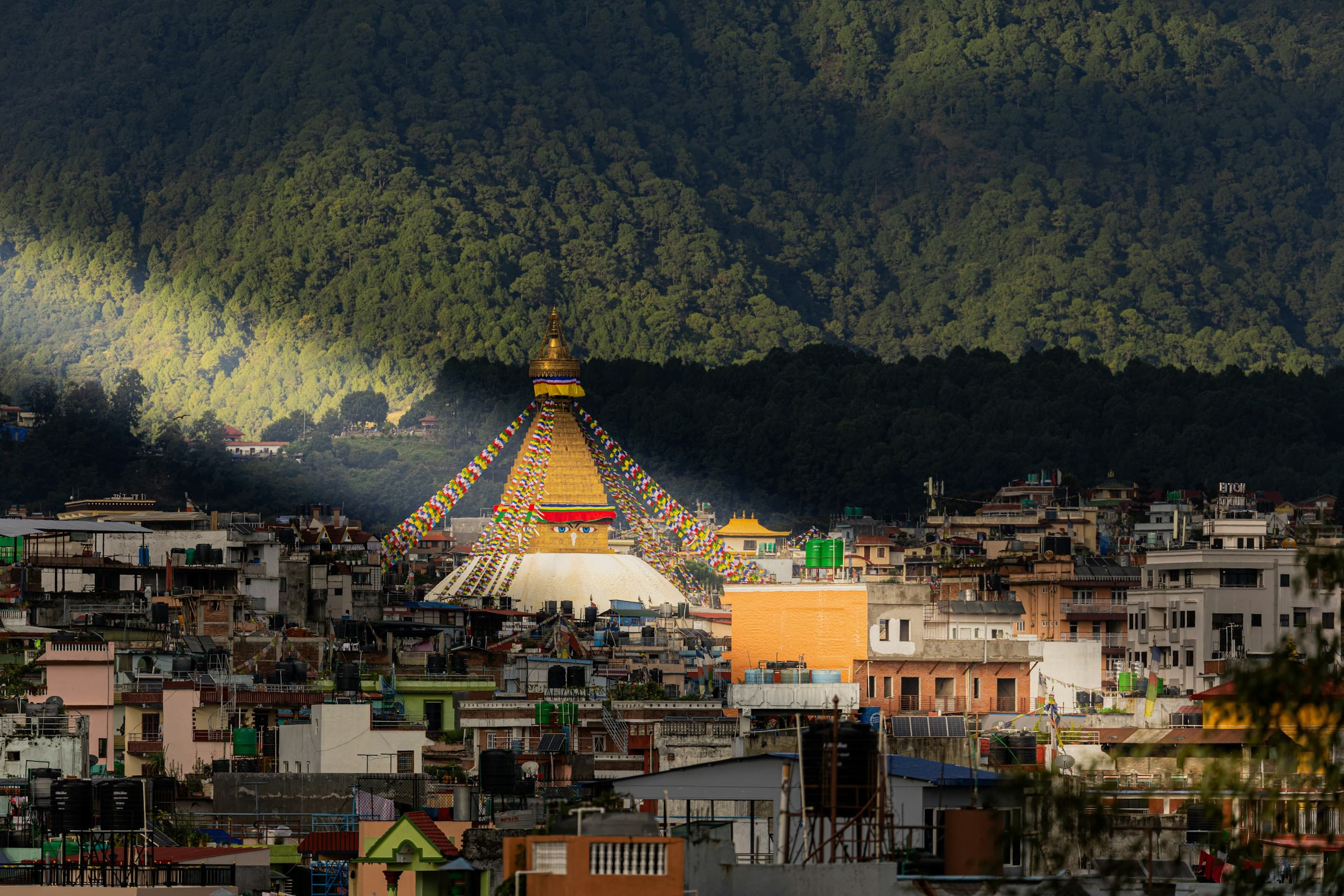
The Kathmandu Valley alone contains seven UNESCO World Heritage Sites, all within a roughly 20-kilometre radius. Pashupatinath Temple is one of the most sacred Hindu pilgrimage sites in the world. Boudhanath Stupa is one of the largest Buddhist stupas in Asia. Swayambhunath, also known as the Monkey Temple, sits on a hill above the city and gives you a view over the valley. The three Durbar Squares in Kathmandu, Patan, and Bhaktapur are open-air museums of Newari architecture, intricately carved wood, pagoda temples, and ancient palaces that somehow survived the 2015 earthquake largely intact.
Beyond Kathmandu, Lumbini in the western Terai is the birthplace of Siddhartha Gautama, the historical Buddha. It is a site of genuine pilgrimage for millions of people worldwide, and the monastic zone there has monasteries built by countries from Thailand to Germany to Korea, each in their own architectural tradition. A visit to Lumbini is a different kind of cultural experience from Kathmandu, quieter, more contemplative, and worth the extra travel day if the spiritual side of Nepal interests you.
2. Wildlife and Nature Experiences
Nepal's lowland Terai region is where the country's wildlife story unfolds. It tends to be overshadowed by the mountains in travel marketing, but it shouldn't be.
Jungle Safari Adventures
Chitwan National Park, Nepal's first national park and a UNESCO World Heritage Site, covers roughly 952 square kilometres of subtropical jungle, riverine forest, and grassland. It supports 68 species of mammals and over 540 species of birds. Most visitors come for the one-horned rhinoceros and the Bengal tiger. The jeep safari is the standard way to explore the park, taking you through dense sal forest and along river banks where animals congregate. Canoe rides on the Rapti River get you close to mugger crocodiles and gharials sunbathing on the banks. For birders, Chitwan consistently delivers.
Bardia National Park in the far west is less visited and, many people argue, a better wildlife experience as a result. Tiger sightings there are reportedly more frequent precisely because the trails are quieter. It takes more effort to reach, but if seeing a tiger in the wild is genuinely your priority, Bardia deserves serious consideration.
Peaceful Lake and Hill Retreats
Pokhara sits at 822 metres above sea level on the shores of Phewa Lake, with the Annapurna range rising dramatically to the north. Boating on the lake is one of those simple activities that does not need much explanation, it is just very pleasant, especially in the early morning when the mountains reflect off the water. The Barahi Temple sits on a small island in the middle of the lake and is worth a visit.
Sarangkot, a 30-minute drive up from the lakeside, is where most visitors go for sunrise views. At the right time of year, the sky turns orange and pink behind Annapurna and Dhaulagiri. It is one of the more photogenic spots in Nepal and does not require any particular level of fitness to reach.
Popular Nepal Tour Packages
1. Cultural and Heritage Tours
For first-time visitors with a primary interest in history and culture, a Kathmandu Valley-focused tour is the natural starting point. Two full days in the valley will get you through the main UNESCO sites without feeling rushed. A third day allows time for deeper exploration, the medieval city of Bhaktapur alone deserves half a day, or for a day hike to Nagarkot for the mountain view.
Kathmandu Valley Highlights
The Kathmandu Durbar Square gives you royal palace architecture, open courtyards, and the living goddess Kumari behind her latticed windows. Patan's Durbar Square is arguably the finest example of Newari craftsmanship in the valley, the bronze sculptures and carved wooden facades are exceptional. Bhaktapur, the best-preserved of the three medieval cities, still feels like a place people actually live in rather than a set built for tourists. The pottery square, the peacock windows, the 55-window palace, it takes time to absorb properly.
Lumbini Spiritual Tour
Lumbini is usually combined with a Chitwan tour into a longer western Nepal itinerary. The Maya Devi Temple marks the exact birthplace of the Buddha, and the sacred garden around it has the Ashoka Pillar erected in 249 BCE. The monastic zone is divided into eastern and western sections, with monasteries built by Buddhist nations from around the world. It is peaceful in a way that busy Kathmandu is not, and the contrast between the two makes both experiences richer.
2. Adventure and Scenic Tours
Nepal has become a serious destination for soft adventure, activities that carry some excitement without requiring weeks of preparation or high-altitude conditioning.
Mountain Flight Experience
The Everest scenic flight is a 60-minute round trip from Kathmandu that follows the Himalayan chain from Langtang to Kanchenjunga, with Everest visible at close range. Every passenger gets a window seat. The aircraft flies at altitude low enough that the scale of the peaks is genuinely impressive. It is not a substitute for trekking to Everest Base Camp, but it is the best option for travellers with limited time or physical restrictions who still want to see the world's highest mountain up close.
Short Trek and Soft Adventure
The Everest Base Camp helicopter tour is a premium one-day option that flies you from Kathmandu to Lukla, continues to Syangboche, and then down to EBC at 5,364 m with a landing at Kala Patthar for the famous Everest view. It is expensive, but it compresses a two-week trek into a day. Good for people who have already trekked to EBC and want to return without the 12-day commitment, or for those who simply cannot do the trek on this trip.
The Ghorepani Poon Hill circuit, a 4 to 5 day teahouse trek, is the most accessible Himalayan trek in the country. You never go above 3,210 metres, the trails are well-marked, and the dawn views from Poon Hill over Dhaulagiri and the Annapurnas are as good as anything Nepal delivers. If you want a genuine taste of trekking without committing to the full Everest or Annapurna experience, Poon Hill is the answer.
3. Luxury and Customized Nepal Tours
The luxury market in Nepal has grown significantly over the last decade. It is no longer just basic teahouses and mid-range hotels. Dwarika's Hotel in Kathmandu is one of the most decorated boutique heritage hotels in Asia, built around restored Newari woodcarvings salvaged from across the valley. Tiger Mountain Pokhara Lodge offers a different kind of luxury, remote, quiet, and with extraordinary mountain views. Chitwan has several genuine wilderness lodges where the experience is more about immersion than convenience.
Premium Experiences
Private guide and vehicle arrangements transform a Nepal tour. The difference between a shared tour bus and a private car for the Kathmandu-Pokhara drive is significant, you stop where you want, you are not on someone else's schedule, and the road itself is scenic enough to deserve attention. Premium operators also arrange experiences that standard tours don't offer: cooking classes with a Newari family, behind-the-scenes access at active monasteries, helicopter transfers to save travel time between destinations.
Tailor-Made Itineraries
Most operators will build a custom itinerary around your dates, interests, and budget. Honeymoon packages in Nepal typically combine Kathmandu heritage with a Pokhara lakeside stay at a boutique property and a jungle lodge in Chitwan. Family tours tend to prioritize wildlife and shorter driving days. Corporate groups often combine Kathmandu sightseeing with a white-water rafting day on the Trishuli River. The infrastructure is flexible enough to accommodate most requests.
Best Time, Cost, and Travel Tips for Nepal Tours
1. Best Time to Visit Nepal
Season matters a lot in Nepal. The country has four distinct periods, and each produces a genuinely different experience. The right choice depends on what you are prioritizing.
Autumn (September to November)
This is the peak season, and there are good reasons for that. The monsoon ends in September and leaves the sky washed clean, mountain visibility in October is as good as it gets anywhere in the Himalayas. Temperatures are comfortable at all elevations, the trails are dry, and October coincides with Dashain and Tihar, Nepal's biggest festivals. You'll see the country in a celebratory mood. The downside is that popular sites and trails are busy. If you are touring rather than trekking, the crowds at major cultural sites are manageable. Aim for early September or late November if you want the views without the October peak.
Spring (March to May)
The second main season. Lower-elevation trails and hills are covered in blooming rhododendrons from March onwards, which makes the Kathmandu Valley, Pokhara, and the lower trekking routes genuinely beautiful. Temperatures are warmer than autumn. The main drawback is atmospheric haze in late April and May, which can reduce mountain clarity. April is generally the sweet spot, the flowers are out, the haze hasn't peaked, and the trails have not yet become crowded with pre-summer travellers.
Winter (December to February) and Monsoon (June to August)
Winter is worth considering if your tour stays at lower elevations. Kathmandu, Pokhara, and Chitwan are all comfortable in December and January. The trails are empty, accommodation is cheaper, and the cultural sites are less crowded. The higher-altitude trekking routes get cold and snowy, which rules out EBC and Annapurna for most visitors, but Poon Hill is still manageable with proper layers.
Monsoon is the least popular season for obvious reasons, heavy rain, muddy trails, and the risk of leeches on lower-elevation trails. The exception is the rain-shadow region of Upper Mustang and Dolpo, which sit behind the Himalayan wall and receive very little precipitation. If those remote regions appeal to you, monsoon is actually a reasonable time to go.
2. Cost of Nepal Tours
Nepal is genuinely affordable by international travel standards, but the range is wide depending on what level of comfort you want and which activities you include.
Budget Range
Standard guided Nepal tours covering Kathmandu, Pokhara, and Chitwan over 7 to 10 days typically run USD 700 to 1,500 per person, depending on the operator, accommodation tier, and whether you fly or drive between cities. That usually includes accommodation, an English-speaking guide, ground transport, and most entry fees.
Luxury tours, boutique heritage hotels in Kathmandu, a lakeside resort in Pokhara, a premium jungle lodge in Chitwan, and domestic flights throughout, start at USD 2,000 per person and can go considerably higher depending on the property choices and add-ons like helicopter tours.
What's Included and What to Expect
A properly packaged Nepal tour should include accommodation on twin-sharing basis, an English-speaking licensed guide for the duration, private vehicle transfers between cities, sightseeing entry fees for the main sites, jungle safari activities in Chitwan, and meals as specified (most Chitwan packages include full board). International airfare, Nepal visa fees, personal expenses, tips, and travel insurance are almost always excluded and should be budgeted separately.
For the visa: most nationalities get a tourist visa on arrival at Tribhuvan International Airport. As of 2026, the fees are USD 30 for 15 days, USD 50 for 30 days, and USD 125 for 90 days. Bring clean USD cash notes, the airport banking counters can be particular about worn or older bills. Pre-filling the online arrival form at immigration.gov.np before you fly saves time in the queue.
Practical Travel Tips for Nepal Tours
Getting Around
The main tourist triangle of Kathmandu–Pokhara–Chitwan is well-connected by tourist bus, private vehicle, and domestic flight. The Kathmandu to Pokhara drive takes about 6 hours on the Prithvi Highway and follows the Trishuli River for much of the route, it is a scenic drive, not just a transfer. The same journey by domestic flight (Buddha Air, Yeti Airlines, or Shree Airlines) takes 25 minutes. From Pokhara to Chitwan is a 5-hour drive. From Kathmandu to Chitwan's Bharatpur airport is a short domestic flight, followed by a 25-minute taxi to Sauraha, the main Chitwan gateway.
If your time is limited, flying between cities makes sense. If you have the flexibility, the road journeys add their own dimension to the trip.
Staying Safe and Healthy
Nepal is a safe and welcoming destination for international tourists. Petty theft exists in crowded areas like Thamel in Kathmandu, but violent crime targeting tourists is rare. The main practical concerns are health-related. Drink only bottled or purified water, tap water is not safe anywhere in Nepal. Food hygiene at tourist restaurants is generally good on the main routes and in the major cities. Altitude is not a concern on standard sightseeing tours that stay in the Kathmandu Valley, Pokhara, and Chitwan, but if you are adding a mountain flight or any trekking component, be aware of the symptoms of acute mountain sickness.
Travel insurance is strongly recommended. Make sure it covers medical evacuation, which can be expensive if a helicopter is involved. For trekking add-ons, confirm that your policy covers the altitude you will reach.
Currency and Payments
The currency is the Nepalese Rupee (NPR). ATMs are widely available in Kathmandu and Pokhara and accept major international cards, though fees apply. Chitwan has ATMs in the main town but they can run out of cash during peak season, carry enough rupees from Pokhara. USD cash is widely accepted for large transactions, visa fees, and luxury services, but day-to-day spending is best done in NPR.
Conclusion
Nepal tours pack a remarkable amount of variety into a compact geography. The cultural depth of the Kathmandu Valley, the mountain scenery from Pokhara and Nagarkot, the wildlife encounters in Chitwan, these are not watered-down versions of a bigger experience somewhere else. They are genuinely world-class on their own terms.
Seven to ten days is enough to cover the main highlights comfortably. Two weeks gives you breathing room to slow down, add a short trek, or include Lumbini and Bardia in the western part of the country. The planning overhead is manageable: visa on arrival for most nationalities, solid tourist infrastructure on the main routes, and a well-developed network of operators who handle the logistics.
Nepal rewards travellers who show up prepared and with some flexibility. Plan the framework, find a good operator, and leave room in the itinerary for the unexpected. That tends to be where the best stories come from.
Frequently Asked Questions
1. What are the best Nepal tours for first-time visitors?
The classic combination of Kathmandu, Pokhara, and Chitwan is the right starting point for most first-timers. It covers culture, mountain scenery, and wildlife in a single itinerary without requiring a specific fitness level. A 7 to 10-day trip handles it comfortably. If time allows, adding Nagarkot for a sunrise mountain view or a Poon Hill short trek rounds out the experience.
2. How many days are enough for a Nepal tour?
Seven to ten days covers the main destinations without feeling rushed. That gives you roughly two days in Kathmandu, a day of travel and a day at Sarangkot in Pokhara, and two to three days in Chitwan. If you want to add a short trek, Lumbini, or Nagarkot, allow twelve to fourteen days.
3. Is Nepal safe for tourists?
Yes. Nepal has a long track record of welcoming international visitors and has a strong culture of hospitality toward travellers. The main precautions are standard travel common sense: watch your belongings in crowded markets, drink purified water, and carry travel insurance. The political situation has been stable for international tourism.
4. What is the best season for Nepal tours?
Autumn (September to November) offers the most reliable mountain views and stable weather. Spring (March to May) is equally good and adds the rhododendron bloom at lower elevations. October is the single most popular month but also the busiest. For a quieter experience with still-good conditions, early September and late November are underrated.
5. How much does a Nepal tour cost?
Standard tours covering Kathmandu, Pokhara, and Chitwan typically run USD 700 to 1,500 per person for a 7 to 10-day guided package. Luxury tours start at USD 2,000 and above. Budget travellers moving independently can get by on USD 30 to 50 per day for accommodation and food on the main routes.
6. Do I need a visa to visit Nepal?
Most nationalities receive a tourist visa on arrival at Tribhuvan International Airport in Kathmandu. The process is straightforward: fill out the online form in advance at the immigration website, pay the fee in USD cash at the airport counter, and collect your visa stamp. Fees in 2026 are USD 30 for 15 days, USD 50 for 30 days, and USD 125 for 90 days. Indian citizens do not need a visa.
7. Can Nepal tours be customized?
Yes. Most established operators offer fully tailor-made packages built around your travel dates, interests, group size, and budget. Common customizations include upgrading accommodation throughout, adding domestic flights to save road travel time, including a Everest helicopter tour or mountain flight, or extending the itinerary to include Lumbini, Bardia, or a short trek.
8. Are luxury Nepal tours available?
Yes, and the quality has improved significantly in recent years. Dwarika's Hotel in Kathmandu, boutique lakeside properties in Pokhara, and high-end jungle lodges in Chitwan offer genuinely premium experiences. Helicopter transfers between destinations, private guides throughout, and curated dining at local restaurants round out the luxury end of the market.
9. Is Nepal suitable for family travel?
Nepal works well for families, provided the itinerary is planned with children in mind. Chitwan is a genuine highlight for kids, the jeep safari and wildlife encounters are accessible and exciting. The cultural sites in Kathmandu reward children who engage with the stories behind them, especially Swayambhunath and Boudhanath. Pokhara's lakeside is relaxed and easy. Avoid high-altitude trekking with young children and keep driving days manageable.
10. What currency is used in Nepal?
The Nepalese Rupee (NPR). ATMs are available throughout Kathmandu and Pokhara and in the main town near Chitwan. USD is widely accepted for visa fees, luxury hotels, and tour payments. For day-to-day expenses and local restaurants, NPR is the practical currency.
11. Can I combine trekking with a Nepal tour?
Yes, and it is a common approach. The Ghorepani Poon Hill circuit (4 to 5 days) slots neatly into a standard Nepal tour as an add-on from Pokhara. The Langtang Valley trek (7 to 10 days) can be done from Kathmandu. Both are suitable for travellers with reasonable fitness who want more than sightseeing but cannot commit to a full Annapurna Circuit or EBC trek.
12. Is travel insurance required for Nepal tours?
Not legally required for standard sightseeing tours but strongly recommended. Medical evacuation from Nepal can be expensive. If your itinerary includes any trekking component above 2,500 m, make sure your policy explicitly covers that altitude. For restricted area treks, emergency rescue insurance is now a legal requirement.

