Solo Trekking in Nepal: 2026 Guide to Rules & Best Routes
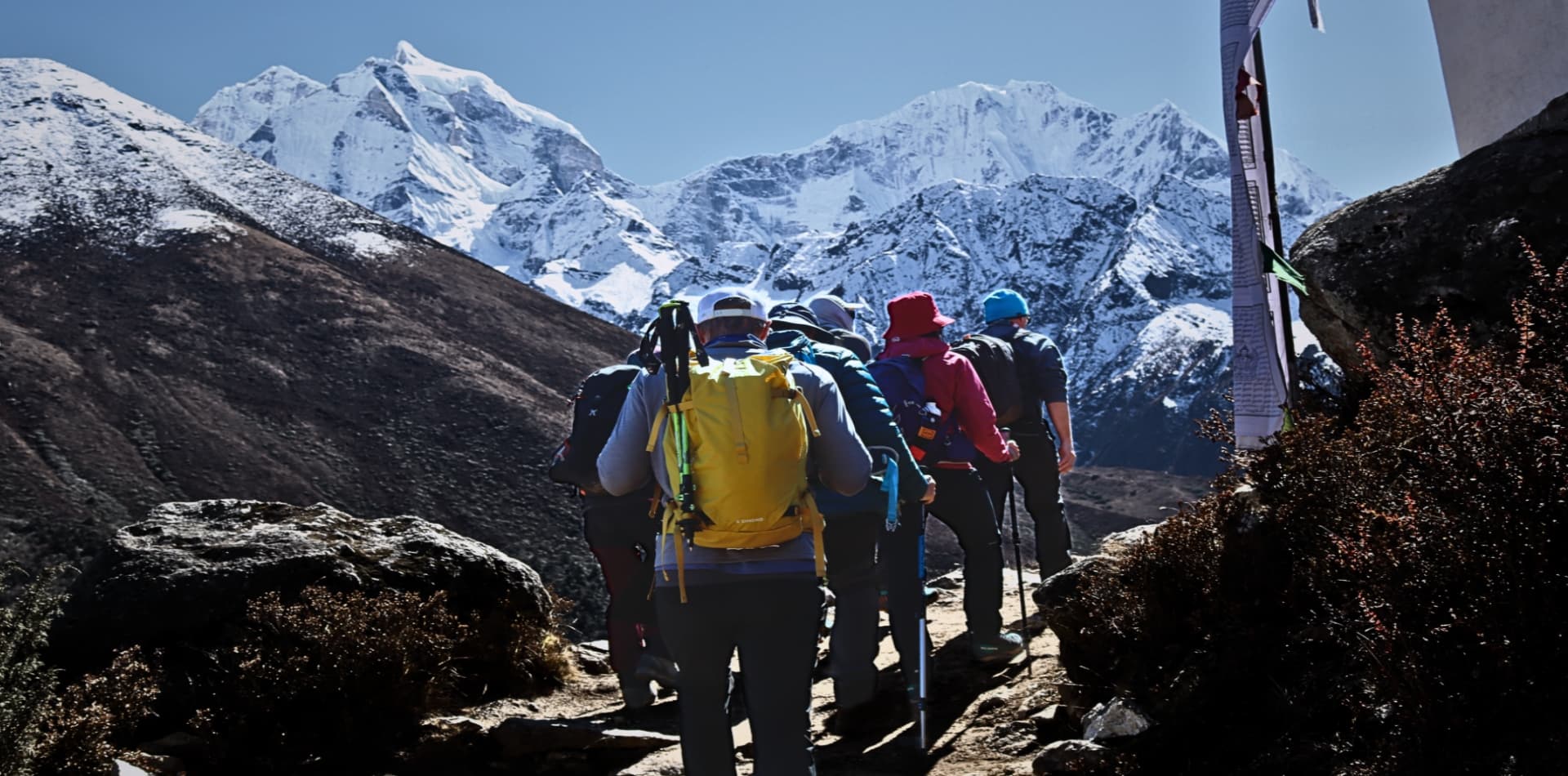
Solo trekking in Nepal used to mean one thing: just you, a trail, and the Himalayas. No group to keep pace with, no tour schedule to follow. That version of the experience no longer exists, at least in the same magnitude. Since April 2023, and now well-enforced as we head into the 2026 season, the newly elected government of Nepal requires all foreign trekkers in national parks and conservation areas to be accompanied by a licensed guide from a registered agency. The rule is known informally as the "No Guide, No Trek" policy, and it is not a suggestion.
But here is the thing: the solo experience itself is very much intact. While the logistics have changed, the spirit hasn’t. You can still create your own itinerary, move at your own pace, eat when and where you want, and spend a night in a teahouse talking to nobody at all (or socializing as a true solo adventurer). A private guide is there for navigation, altitude monitoring, and emergency response, not to run a group tour. And in March 2026, the government took things a step further by allowing solo trekkers to apply individually for permits to restricted areas, which previously required a minimum group of two, a major shift.
This guide covers everything you need to plan a solo-style trek in Nepal right now: what the 2026 rules actually looks like in practice, what permits you need, the best routes to consider, safety specifics for solo female trekkers, and how to prepare for altitude.
Understanding Nepal's 2026 Solo Trekking Rules
Is Solo Trekking Still Allowed in Nepal?
Technically, no, not in the independent sense that was once a staple for the region. Unguided solo trekking in Nepal's national parks and conservation areas is no longer permitted for foreign nationals. That covers virtually every major trekking route in the country: the Everest region, the Annapurna Circuit, Langtang Valley, Manaslu, and all restricted zones.
In practical terms, every non-Nepali citizen trekking on a regulated route must hire a licensed guide through a government-registered trekking agency. The Green TIMS card, which used to exist specifically for independent solo trekkers, no longer exists. Checkpoints are enforced. Trekkers caught on the trail without a guide can be removed from the route, fined, or blacklisted from future permits.
The reason for the rule is straightforward: between 2015 and 2025, search and rescue operations involving solo trekkers increased by nearly 40 percent. The costs fell on the Nepali government and local communities. The mandatory guide requirement was the response.
The "No Guide, No Trek" Policy
Here is what the rule covers:
-
Every non-Nepali citizen trekking in a national park, conservation area, or restricted area must be accompanied by a licensed guide hired through a TAAN-registered trekking agency.
-
One guide can accompany a maximum of seven trekkers. For a solo traveller, that means a one-on-one arrangement.
-
Short day hikes within the Kathmandu Valley and areas outside national park boundaries are generally exempt.
The March 2026 Update for Restricted Areas
Nepal’s Department of Immigration issued a new policy regarding the permits on March 22, 2026. Trekkers traveling alone as foreigners can apply for RAPs by themselves without requiring another foreigner to be present in the same group.
The former minimum number of two people on an application was always difficult for solo travellers since they were required to have a second person along with them to trek, whether in Upper Mustang, Dolpo, Manaslu, or Kanchenjunga. That requirement has been lifted across all 13 restricted districts.
What has not changed: a licensed guide and a registered agency are still mandatory. Every aspect of the permit process must go through official channels. The update simply removes the requirement to find a trekking partner.
Mandatory Permits for Solo Trekkers
Nepal's permit system has been updated for 2026 and is now largely digital. Your registered trekking agency handles all applications on your behalf. Each permit comes with a QR code linked to your guide's licence and your insurance details. Checkpoints scan these at multiple points along the trail.
The Essential Documentation List
-
TIMS Card (Blue, Guided): The old Green TIMS card no longer exists. The Blue TIMS card is issued only to trekkers with a registered guide, and costs approximately USD 15–17 per person. (Note: TIMS is no longer required in the Everest/Khumbu region.)
-
National Park or Conservation Area Permit: Required for every protected area. The Sagarmatha National Park permit covers the Everest region; the Annapurna Conservation Area Permit (ACAP) covers Annapurna, Poon Hill, and Mardi Himal. Both cost approximately NPR 3,000 (around USD 22–25) plus VAT.
-
Khumbu Pasang Lhamu Rural Municipality Permit: This replaces TIMS in the Everest region. The fee sits at roughly NPR 2,000.
-
Emergency Rescue Insurance: Mandatory for restricted areas. Your policy must explicitly cover helicopter evacuation above 4,000 m. Policies that do not state this clearly are rejected at the Department of Immigration during permit collection.
Restricted Area Permits (RAP)
Remote regions, Upper Mustang, Dolpo, Manaslu, Nar-Phu, Tsum Valley, Kanchenjunga, and others, require a separate Restricted Area Permit. These can only be obtained through a licensed agency; there is no self-application option.
Upper Mustang permit fees were restructured in late 2025 from a flat USD 500 for 10 days to a daily rate of USD 50 per person. This makes shorter visits more cost-effective than the old model. Other restricted zones vary considerably, Manaslu runs around USD 100 per week during peak season (September to November), while Upper Dolpo also sits at USD 500 for the first ten days. Always confirm current fees with your agency before booking, as rates are subject to seasonal revision.
Best Routes for the Solo Experience
The guide requirement does not make every route equally well-suited to a solo traveller. Some trails have better teahouse density, more reliable mobile coverage, and infrastructure that makes the experience feel genuinely independent even with a guide alongside you. Here are the strongest options.
Top Trails for Solo Beginners and Solo Female Trekkers
Ghorepani Poon Hill (4–5 Days)
Max elevation: 3,210 m | Difficulty: Easy to moderate
This is the finest introductory trek in Nepal, and it can also compete among other treks for seasoned trekkers seeking something shorter. You traverse rhododendron forests, spend your nights in efficient teahouses, and hike up to Poon Hill for a dawn view of Dhaulagiri and Annapurna. It is a well-developed route with lots of traffic such that you will always find someone else with whom to share lodging. At just above 3,300 m, there is no danger of altitude sickness, making it suitable for new trekkers or for acclimatization purposes before a more challenging trek. Solo women trekkers will feel safe trekking here since they will always find people around them.
Annapurna Base Camp (7–12 Days)
Max elevation: 4,130 m | Difficulty: Moderate
The ABC trek offers a good balance between challenge and comfort. Teahouses are closely spaced, and the evenings at base camp, surrounded by a near-360-degree wall of peaks including Annapurna I (8,091 m), Machapuchare, and Hiunchuli, are genuinely hard to beat. It is busy enough that you will naturally meet other trekkers during the day and in the dining rooms at night, which suits people who want solitude on the trail but company in the evenings. The route is well-marked, but altitude does become a factor above 3,500 m, so the acclimatisation pace matters.
Langtang Valley (7–10 Days)
Max elevation: ~4,984 m (Tserko Ri) | Difficulty: Moderate
Langtang is the closest high-altitude trek to Kathmandu, which cuts out long internal travel days. It is considerably quieter than the Everest or Annapurna routes, which is exactly what solo travellers looking for some actual solitude tend to want. The valley follows a dramatic floor below Langtang Lirung (7,227 m), and the side climb to Tserko Ri gives a serious high-altitude day without committing to a full expedition schedule. The region was largely rebuilt after the 2015 earthquake, and the local communities are actively welcoming visitors.
Off-the-Beaten-Path Options (Restricted Areas)
The March 2026 rule change opens up some genuinely extraordinary terrain to solo travellers who were previously blocked by the two-person minimum requirement.
Upper Mustang (10–14 Days)
Permit cost: USD 50 per person, per day | Difficulty: Moderate
Upper Mustang is among the most unique places that one could trek in. Upper Mustang lies in an arid rain shadow on the other side of the Himalayan range. It is a rugged area where the scenery consists of dried-up gorges, cliffs, cave dwellings, white-washed stupa shrines, and ochre-tinted settlements that seem to have remained untouched by time.
Most trekkers aim to reach the walled town of Lo Manthang located at an altitude of 3,840 meters above sea level. This area holds a Tibetan-like culture rather than the Nepalese culture that tourists encounter elsewhere in Nepal. Tourists must seek permission from a registered agency before embarking on their journey. They are also required to hire a professional guide for the entire trip.
Tsum Valley (14–18 Days)
Tsum Valley receives a fraction of the visitors that Upper Mustang does, and that is a large part of its appeal. The valley borders Tibet and shelters a Tibetan Buddhist community that has been largely cut off from external influence for generations. Among trekkers looking for remote restricted-area routes that the 2026 rule change has made accessible to solo travellers, Tsum Valley and the adjacent Gorkha Manaslu region are among the most frequently targeted.
Essential Safety and Preparation
Is Nepal Safe for Solo Female Trekkers?
Yes. Nepal consistently ranks as one of the safer destinations in Asia for solo female travellers, and the mandatory guide rule has arguably made the trekking experience safer still. The real risks on Himalayan trails are altitude, weather, and navigation, not people. A licensed guide handles all three.
In 2025 surveys, 98 percent of solo female trekkers reported their experience as safe or very safe. Serious violent incidents against foreign trekkers are extremely rare. Most issues that do occur are petty theft in urban areas like Thamel, not on the trail. Hiring a licensed female guide through a reputable agency is an increasingly available option and adds both cultural context and an additional layer of comfort on longer treks.
A few practical pointers for solo female trekkers:
-
Dress modestly when walking through villages, particularly near monasteries and religious sites. Your guide will remind you, but trekking trousers rather than shorts when passing through settlements is the standard expectation.
-
Tampon availability outside Kathmandu and Pokhara is limited. Pack what you need for the full trek.
-
Get an Ncell or NTC SIM card at the airport. Coverage is solid on the main routes and helps with offline mapping, staying in contact, and GPS backup.
-
In Kathmandu and Pokhara, standard urban precautions apply: avoid walking alone in poorly lit areas after dark, use app-based taxis like Pathao or InDrive rather than hailing from the street.
Altitude Sickness Prevention
Altitude sickness is the most serious physical risk on any Himalayan trek. It can affect fit, experienced trekkers as readily as beginners, and elevation is the only variable that matters. Symptoms of Acute Mountain Sickness (AMS), persistent headache, nausea, dizziness, difficulty sleeping, typically begin above 2,500 m.
The "Climb High, Sleep Low" Rule
Once above 3,000 m, limit your sleeping altitude gain to 300–500 m per day. This usually means hiking to a higher point during the day and returning to a lower camp to sleep. Your itinerary should include dedicated rest days above 3,500 m. A good guide will build these in automatically, but it is worth understanding the logic yourself.
Practical Health Points
-
Hydration: Aim for 3–4 litres of water daily once above 3,500 m. Do not drink tap water or untreated stream water. Use boiled water from teahouses, purification tablets, or a filter bottle such as a Grayl or SteriPen.
-
Avoid alcohol in the first 48 hours at any new altitude. It accelerates dehydration and can mask early AMS symptoms.
-
Your guide is trained to monitor blood oxygen levels and recognise early signs of AMS, HACE (High Altitude Cerebral Edema), and HAPE (High Altitude Pulmonary Edema). If they recommend rest or descent, listen.
-
If symptoms appear, do not ascend further. Descending even 300–500 m usually brings significant relief. Do not try to push through AMS on a timed schedule.
Packing for a Solo Trek
You do not need expensive gear, but you need gear that has been tested before you arrive. The fundamental principle is layering, because temperatures above 4,000 m swing wildly between midday sun and night-time cold.
-
Base layer: Thermal top and bottoms that wick moisture. Avoid cotton, it stays wet and gets cold.
-
Mid-layer: A fleece or lightweight down jacket for rest breaks and lunch stops.
-
Outer layer: A waterproof, windproof shell for rain, snow, and exposure on passes.
-
Footwear: Well broken-in trekking boots. Do not attempt this with new boots. A pair of sandals or light shoes for teahouse evenings.
-
Sleeping bag rated to -10°C or lower. Even on teahouse routes, the provided blankets are often insufficient at altitude.
-
Headlamp, power bank, water purification, and a basic medical kit including altitude medication if your doctor recommends it.
-
Cash: ATMs exist in Namche Bazaar and Lukla on the Everest route, but coverage is patchy elsewhere. Carry enough rupees for the full duration of your trek.
Conclusion
Solo trekking in Nepal in 2026 works. The rules are more involved than they were five years ago, but they are workable, and for most trekkers, having a licensed guide alongside them turns out to be a better experience than they expected. The logistics are handled, the navigation stress disappears, and the altitude risk is genuinely better managed.
The March 2026 update also matters for anyone who had been put off by the old group-size rules for restricted areas. Upper Mustang, Tsum Valley, and the Manaslu region are now accessible to solo travellers in a way they genuinely were not before. That is new terrain worth taking seriously.
Book through a TAAN-registered agency, get your permits in order well before arrival, take the altitude acclimatisation plan seriously, and the rest tends to take care of itself. The Himalayas have not changed, just the paperwork to get there.
Frequently Asked Questions
Can I trek solo in Nepal in 2026?
Not independently. All foreign trekkers in national parks and conservation areas are legally required to hire a licensed guide through a registered trekking agency. The rule applies to the Everest region, Annapurna, Langtang, Manaslu, and all restricted zones. Short day hikes near Kathmandu outside park boundaries are generally exempt.
Is Nepal safe for solo female trekkers?
Yes, and it has become more so since the mandatory guide rule took effect. Your guide is with you throughout every day on the trail. The genuine safety risks in the mountains, altitude, weather, navigation, are exactly what a licensed guide is trained to manage. In 2025 surveys, 98 percent of solo female trekkers rated their experience as safe or very safe. Serious incidents against foreign trekkers on the trail are extremely rare.
What is the best time of year for solo trekking in Nepal?
Autumn (September to November) is the most popular season for good reason: the monsoon has cleared the air, mountain visibility is sharp, and the weather is stable. Spring (March to May) is the second-best option, warmer, with rhododendrons in bloom at lower elevations, though late spring can bring some haze. April tends to be the sweet spot of the spring season.
How much does a licensed trekking guide cost?
Expect to pay between USD 25 and USD 50 per day, depending on the route and the guide's experience. For restricted areas like Upper Mustang or Dolpo, experienced guides with specialised local knowledge sit at the higher end of that range.
Do I need a partner for Upper Mustang in 2026?
No longer. As of March 22, 2026, the Department of Immigration officially updated its policy to allow solo foreign trekkers to obtain a Restricted Area Permit individually. The old two-person minimum requirement has been removed. A licensed guide and a TAAN-registered agency remain mandatory, but you no longer need to find a second trekker.
Does travel insurance cover solo trekking in Nepal?
Standard travel insurance often does not. You need a policy that explicitly covers high-altitude trekking, helicopter evacuation, and medical treatment above 5,000 m. For restricted areas, this type of emergency rescue insurance is a legal requirement. Confirm coverage with your insurer before your permits are processed.
What is the success rate for the Everest Base Camp trek?
Most healthy trekkers who follow a proper 12–14 day itinerary with built-in acclimatisation days successfully reach base camp at 5,364 m. The bigger risk is not the terrain, it is altitude sickness from moving too fast. The optional extension to Kala Patthar (5,545 m) for the Everest sunrise view is completed by the majority who attempt it.
Can I buy permits myself in Kathmandu?
No. Most permits, including the Blue TIMS card and all Restricted Area Permits, must be processed by a registered trekking agency. The Restricted Area Permit in particular can only be applied for by agencies with a USD bank account and access to the Department of Immigration's online portal.
Are there ATMs on the trekking trails?
There are ATMs in Namche Bazaar and Lukla on the Everest route. On most other routes, reliable ATM access is limited once you leave Kathmandu or Pokhara. The standard advice is to carry enough cash for your entire trek, including guide tips and any teahouse extras like hot showers or phone charging fees.
Is the water safe to drink while trekking?
No. You should not drink untreated water at any point on the trail. Boiled water is available at teahouses for a small fee, or use purification tablets or a filter bottle. A Grayl or SteriPen is the practical choice for most trekkers.