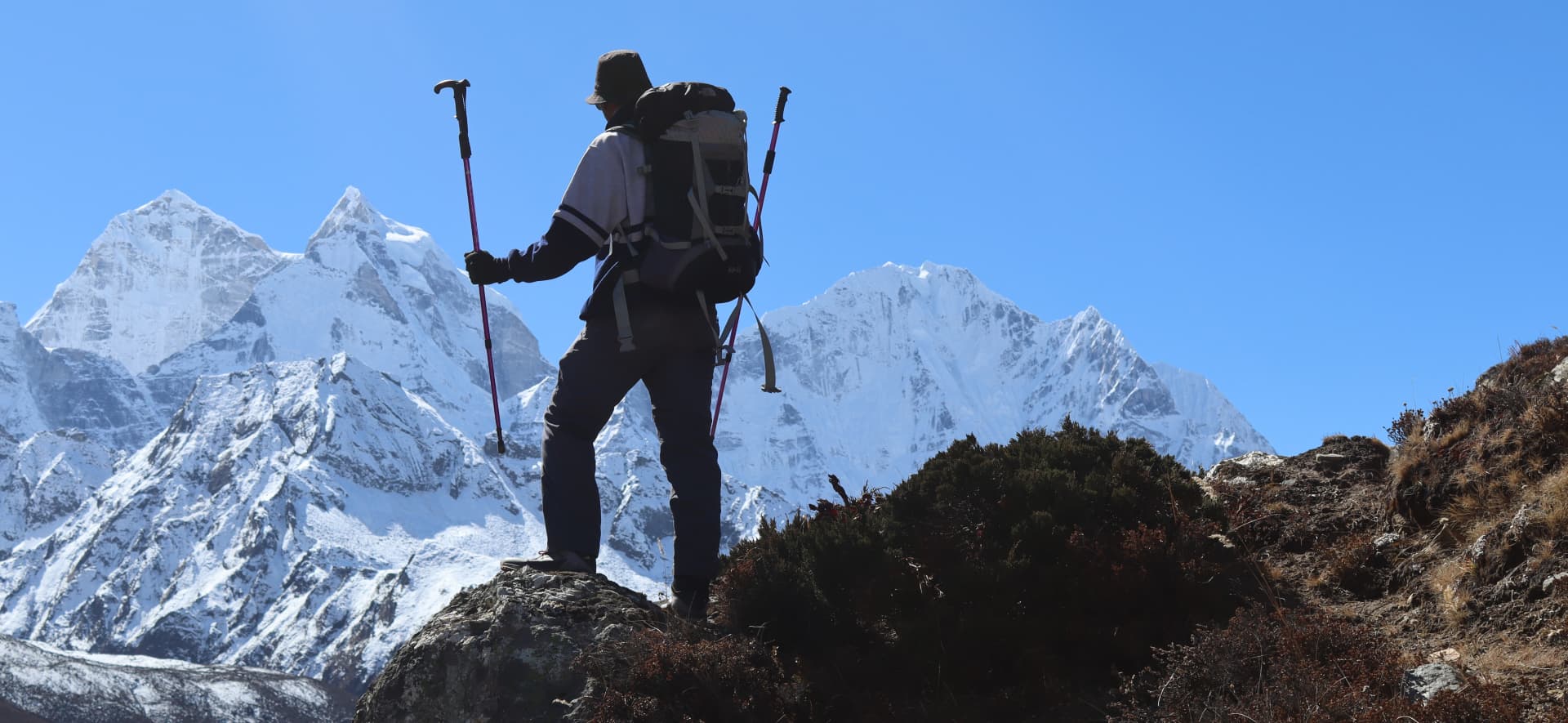
Why Choose the Everest Base Camp Trek
Everest Base Camp Trek is tallest mountain on Earth, Mt. Everest, is 8849 meters high and located in Sagarmatha National Park in eastern Nepal. While climbing the mountain in its entirety is a feat requiring years of training and preparation along with physical fitness par excellence, the base camp itself is quite a bit easier and can be done by those who are reasonably fit and willing to go through some physical exertion.
The base camp itself lies at a height of 5364m, higher than many mountains in the world. The 15-day trip to Everest Base Camp (EBC) is one of the most popular among hikers and mountain enthusiasts due to the magnificent scenery and beauty of Mt. Everest. Crossing the Dhudhakoshi, a continual river created by the melting of the glacial ice of the Himalayas, and walking past the renowned sherpa village of Namche Bazaar on a sloping hill we will move to the villages of Tengboche, Dingboche, and Gorakshep.
The route is accompanied by Buddhist monasteries, stupas, and chortens all the way to Gorakshep. You will be able to see boulders engraved with numerous Buddhist mantras written in the Tibetan script as well as colorful prayer flags. The magnificent Buddhist monastery at the village of Tengboche adds to the spiritual vigor of the trip.
When you arrive at base camp and see Everest in the early sun from the Khumbu Glacier, the longest of its type, that is when the journey reaches its climax. Climbing over 4000m you may experience breathing difficulties due to the low oxygen density in the region. Care must be taken however we will take the necessary acclimatization procedures to make the trip easier.
Every night during the trip our guide will provide you with a detailed account of the itinerary for the following day and will be more than happy to help answer your queries.
Best Time for Everest Base Camp Trek
The primary trekking seasons are late September through early November and February through May, when Base Camp temperatures can reach as low as -6°C and weather conditions are generally stable.
During the spring season, you will be able to see flowers like the rhododendron in bloom in the luscious forests that we will pass through on the trek. The hills will be green and full of life welcoming you to the region. In the region as a whole, springtime is perhaps the busiest season.
During the autumn season, the skies are generally known to be clearer and the views of the vistas and the valleys and mountains from the many viewpoints along the trek are absolutely stunning. This time of year is popular among hikers because it offers breathtaking panoramic vistas with less heat haze and cloud cover. An advantage of trekking at this time is having the choice to select one of the area's lesser-known routes, which nevertheless provide breathtaking vistas without the commotion of the more well-known routes.
Is "Everest Base Camp Trek" for me?
Everest Base Camp Trek is classified as a MODERATE trek. Within the Nepal Trek Grading system, this trip can be classified as a Grade B trip with minimal elements of Grade C. It implies that anyone in excellent health and with adequate determination can complete the journey. However, rookie trekkers would need to make proper preparations for the trip. Experienced trekkers, especially those with high-altitude trekking experience, shouldn't have any problems on the hike.
Temperatures on the hike can reach as low as -10 degrees celsius in autumn-winter which is made colder by the high-speed winds that frequent the region. Hence proper attire and mental preparation are essential for the trip. The highest altitude reached on the hike is 5545m at the peak of Kalapatthar. Numerous other viewpoints greater than 5000m exist on the trip including the peak of Nagerjun hill. As such, altitude sickness is a real possibility in this region and therefore proper acclimatization needs to be accounted for.


